Our patient is a 65 year-old female complaining of chronic lateral elbow pain and vague sensory issues involving her thumb.
The patient’s condition had persisted for 3+ years, and she had sought help from multiple physical therapists and pain management doctors. She was treated with multiple epidural steroid injections, but nothing helped.
Clinical Exam
Upon our initial exam, it became immediately apparent that the patient had multiple issues related to posture, biomechanics, structural instability and fascial dysfunction.
Ultrasound Exam
We conducted a dynamic, proximal-to-distal exam using high-resolution ultrasound. Our exam indicated that the usual suspects involved in lateral elbow pain – the ECRB and EDC tendons – were not the primary cause of her condition.
Our dynamic ultrasound images revealed:
We concluded that the patient’s nerve pain involved dynamic compression of multiple proximal and distal nerves, driven by poor posture and inefficient biomechanics, along with osteoarthritis. In other words, the source of pain was not isolated to the elbow or compression of a specific nerve. The problem was a whole-body combination of poor motor control, inefficient muscle coordination, fascial dysfunction, and global instability which created tension to brachial plexus .
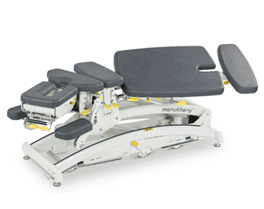
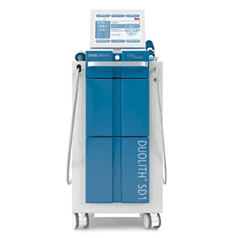
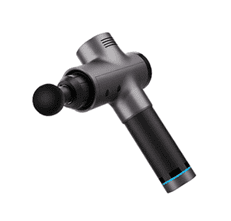
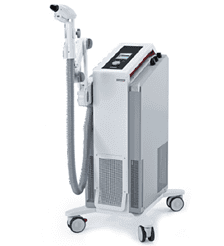
Our treatment began with treating distal medial compression with Prolotherapy injections, Stecco fascial manipulation, and extracorporeal shockwave therapy. After 3 injections, 4 shockwave sessions and 4 Stecco sessions, the patient’s elbow pain was reduced by 75%.
We then moved on the shoulders and cervical spine, with more injections and multiple fascial manipulation sessions. The patient was 100% pain-free after 8 weeks of treatment. We continued with physical therapy to improve her posture, enhance her stability, and optimize her mobility.
In younger patient’s, lateral elbow pain typically arises from repetitive overuse, often from sports, exercise, or occupation. But in older patients, it is important to consider other biomechanical factors that affect the neuromuscular system, and to explore issues further along the kinetic chain. Treatment should be strategic, and include manual therapy, orthobiologics, energy technologies, and physical therapy, addressing the whole patient, not just the locus of pain.
By contrast, modern medicine suffers from tunnel vision that compartmentalizes pain and segregates body parts and systems. This approach often leads to misdiagnosis, mistreatment, pharmaceutical dependency, and unnecessary surgeries. From our perspective, personalized integrative medicine is the future of health care.

Verified Expert Profiles


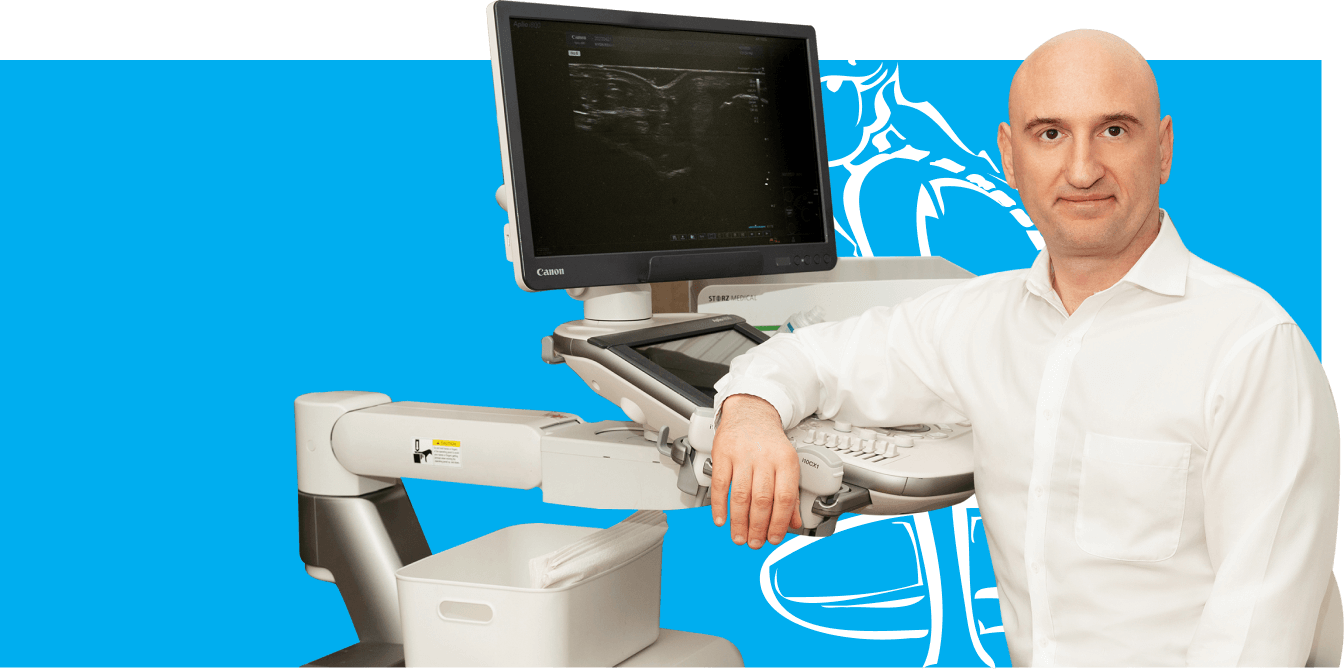
Dr. Lev Kalika is a world-recognized expert in musculoskeletal medicine. with 20+ years of clinical experience in diagnostic musculoskeletal ultrasonography, rehabilitative sports medicine and conservative orthopedics. In addition to operating his clinical practice in Manhattan, he regularly publishes peer-reviewed research on ultrasound-guided therapies and procedures. He serves as a peer reviewer for Springer Nature.
Dr. Kalika is an esteemed member of multiple professional organizations, including:

Below is a prime example of how ultrasound can take the guesswork out of diagnosis.

A bad physical therapy experience is one of the primary causes of unnecessary surgery

In this instance, an athlete was originally diagnosed with minor quadriceps muscle strain and was treated for four weeks, with unsatisfactory results. When he came to our clinic, the muscle was not healing, and the patients’ muscle tissue had already begun to atrophy.
Upon examination using MSUS, we discovered that he had a full muscle thickness tear that had been overlooked by his previous provider. To mitigate damage and promote healing, surgery should have been performed immediately after the injury occurred. Because of misdiagnosis and inappropriate treatment, the patient now has permanent damage that cannot be corrected.
The most important advantage of Ultrasound over MRI imaging is its ability to zero in on the symptomatic region and obtain imaging, with active participation and feedback from the patient. Using dynamic MSUS, we can see what happens when patients contract their muscles, something that cannot be done with MRI. From a diagnostic perspective, this interaction is invaluable.
Dynamic ultrasonography examination demonstrating
the full thickness tear and already occurring muscle atrophy
due to misdiagnosis and not referring the patient
to proper diagnostic workup
Demonstration of how very small muscle defect is made and revealed
to be a complete tear with muscle contraction
under diagnostic sonography (not possible with MRI)
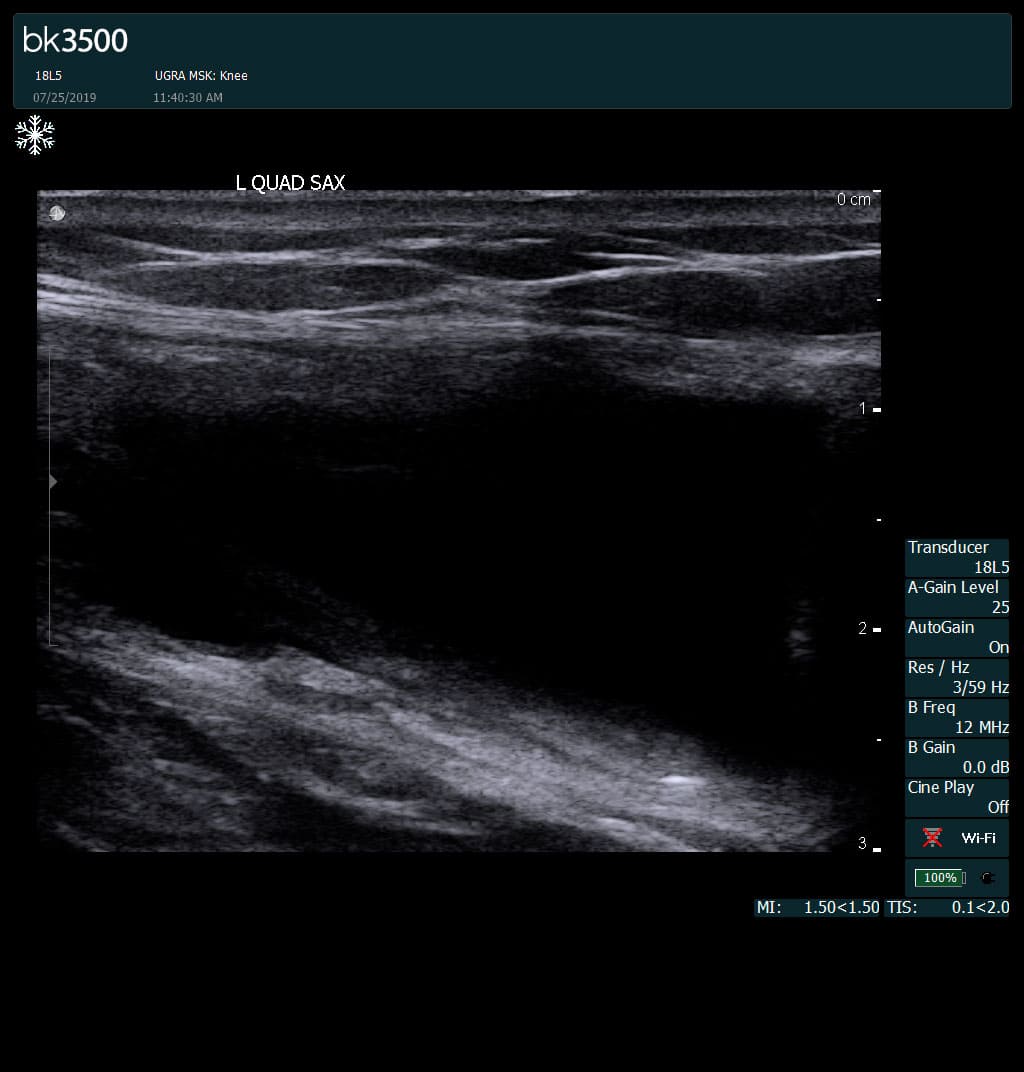
Complete tear of rectus femoris
with large hematoma (blood)
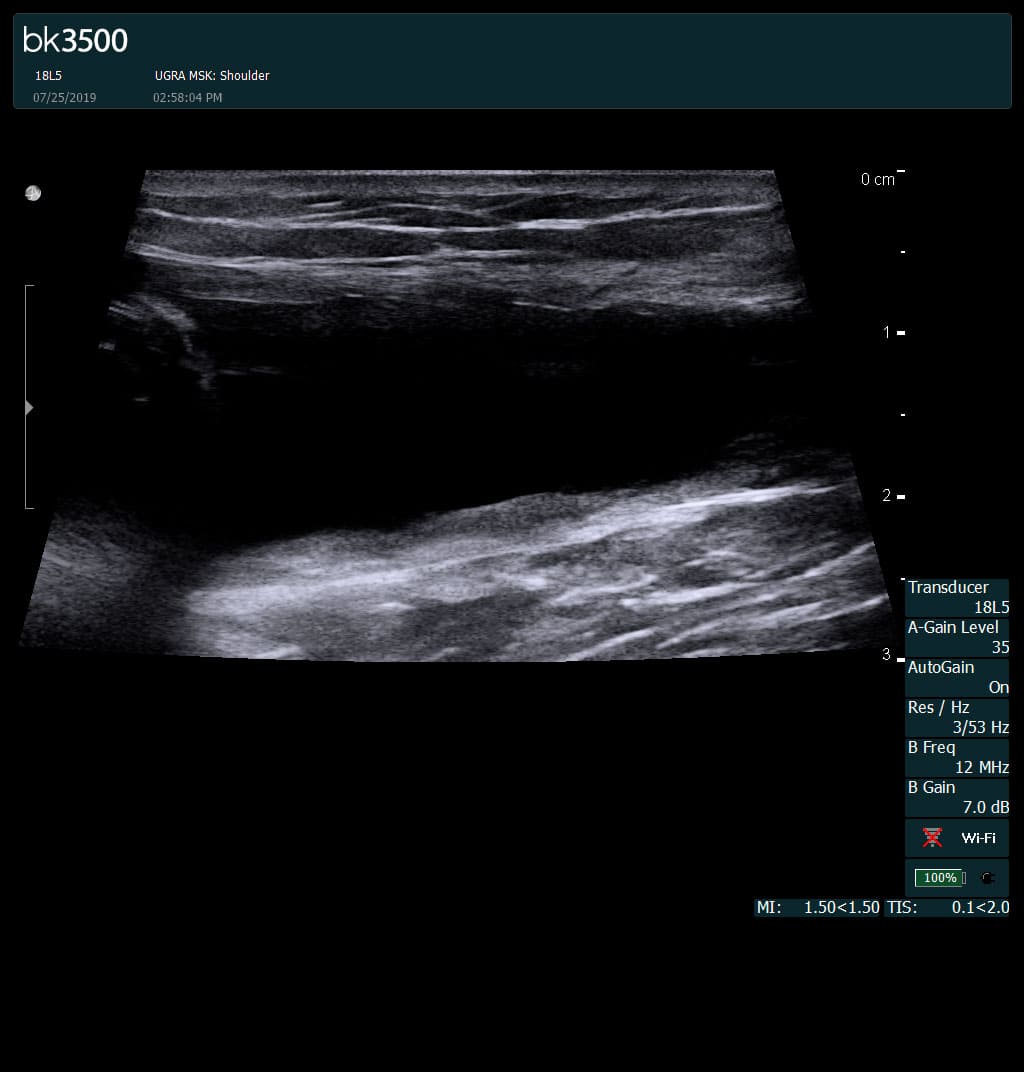
Separation of muscle ends due to tear elicited
on dynamic sonography examination


 Request Telehealth