In healthy physically active patients, it is not uncommon to overlook a torn tendon or ligament during an ultrasound exam. But in patients with joint hypermobility or Ehlers-Danlos syndrome, the most common oversight is a fascial failure between adjacent muscles.
In JHS/EDS, dynamic ultrasound often reveals:
Such findings can look subtle — even “normal” in isolation — but together they explain a lot.
Muscles do not generate forces in isolation: Force transmission from muscle to muscle depends on intact fascial connections that control and stabilize movement and govern load distribution. In JHS / EDS patients, this system frequently fails.
In such cases:
JHS / EDS patients often feel weak and report fatigue, despite positive tests for strength. Conventional strength training programs are challenging, and patients often report persistent pain in the absence of obvious structural damage.
High resolution ultrasound gives us insight into why muscles fire but force is not distributed. What we find is more than just a matter of loss of tension and force coupling – we often find evidence of fascial dehiscence (separation of fascial layers post-surgery), fascial tearing, or delamination of fascial layers.
Not only do such factors result in the loss of force transfer, but also in sensory disorganization due to the abundance of mechanoreceptors and nociceptors embedded within fascial tissue.
When examining JHS / EDS patients, it is essential to examine muscle-to-muscle fascial behavior. This requires in-depth knowledge of fascial sonoanatomy and advanced clinical skills to dynamically assess force coupling and load transfer.
Without efficient force transfer, muscle strength is inadequate to achieve efficient functional mobility.

Verified Expert Profiles


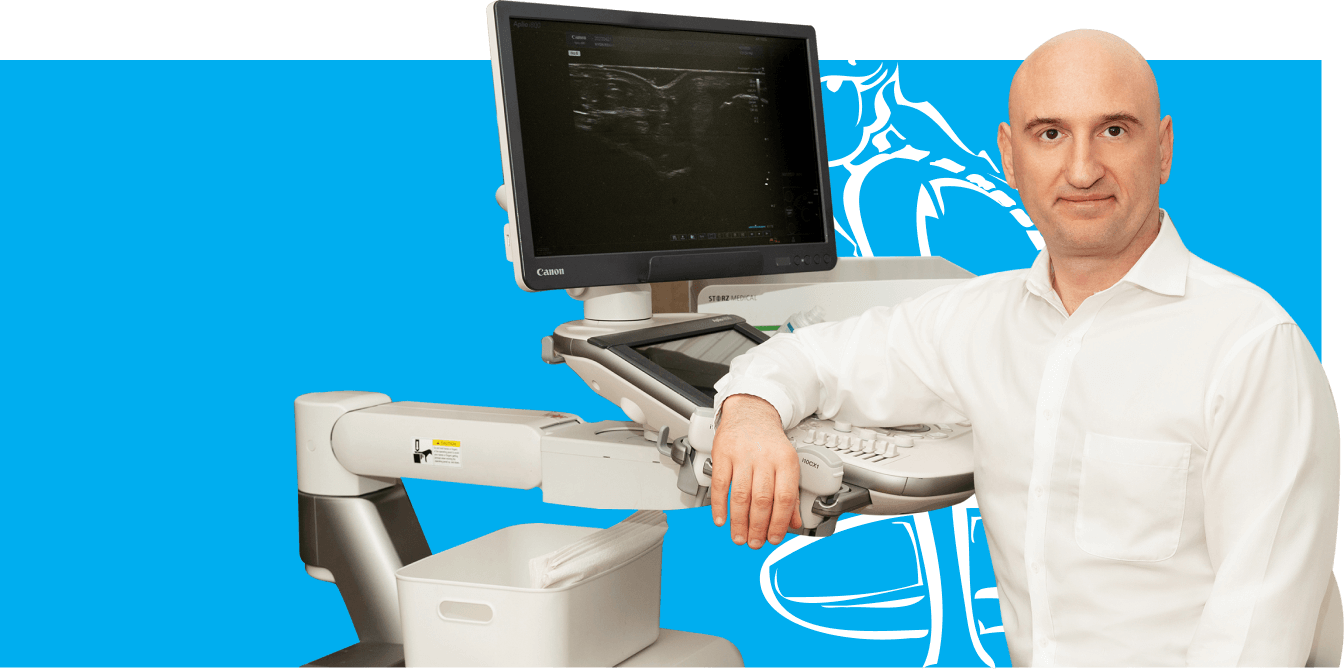
Dr. Lev Kalika is a world-recognized expert in musculoskeletal medicine. with 20+ years of clinical experience in diagnostic musculoskeletal ultrasonography, rehabilitative sports medicine and conservative orthopedics. In addition to operating his clinical practice in Manhattan, he regularly publishes peer-reviewed research on ultrasound-guided therapies and procedures. He serves as a peer reviewer for Springer Nature.
Dr. Kalika is an esteemed member of multiple professional organizations, including:

Below is a prime example of how ultrasound can take the guesswork out of diagnosis.

A bad physical therapy experience is one of the primary causes of unnecessary surgery

In this instance, an athlete was originally diagnosed with minor quadriceps muscle strain and was treated for four weeks, with unsatisfactory results. When he came to our clinic, the muscle was not healing, and the patients’ muscle tissue had already begun to atrophy.
Upon examination using MSUS, we discovered that he had a full muscle thickness tear that had been overlooked by his previous provider. To mitigate damage and promote healing, surgery should have been performed immediately after the injury occurred. Because of misdiagnosis and inappropriate treatment, the patient now has permanent damage that cannot be corrected.
The most important advantage of Ultrasound over MRI imaging is its ability to zero in on the symptomatic region and obtain imaging, with active participation and feedback from the patient. Using dynamic MSUS, we can see what happens when patients contract their muscles, something that cannot be done with MRI. From a diagnostic perspective, this interaction is invaluable.
Dynamic ultrasonography examination demonstrating
the full thickness tear and already occurring muscle atrophy
due to misdiagnosis and not referring the patient
to proper diagnostic workup
Demonstration of how very small muscle defect is made and revealed
to be a complete tear with muscle contraction
under diagnostic sonography (not possible with MRI)
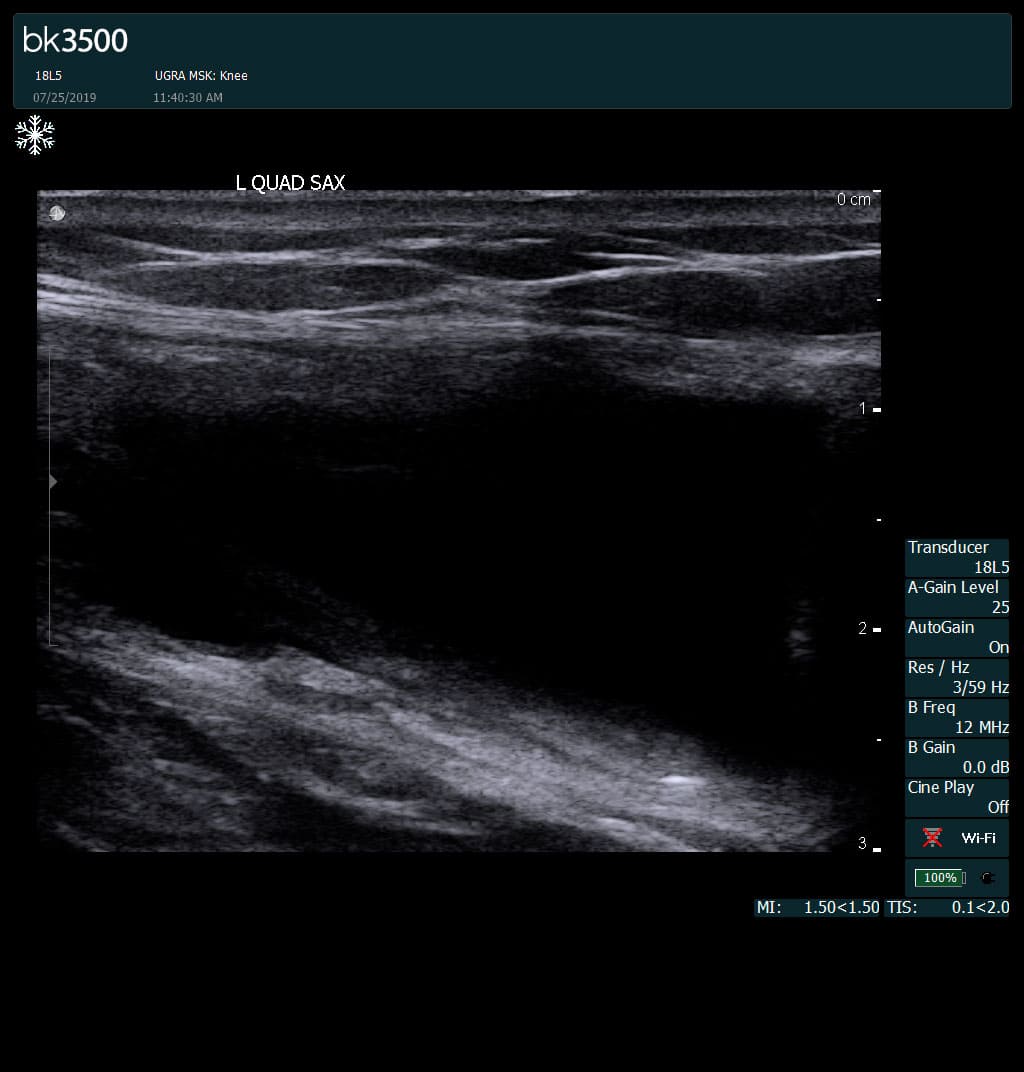
Complete tear of rectus femoris
with large hematoma (blood)
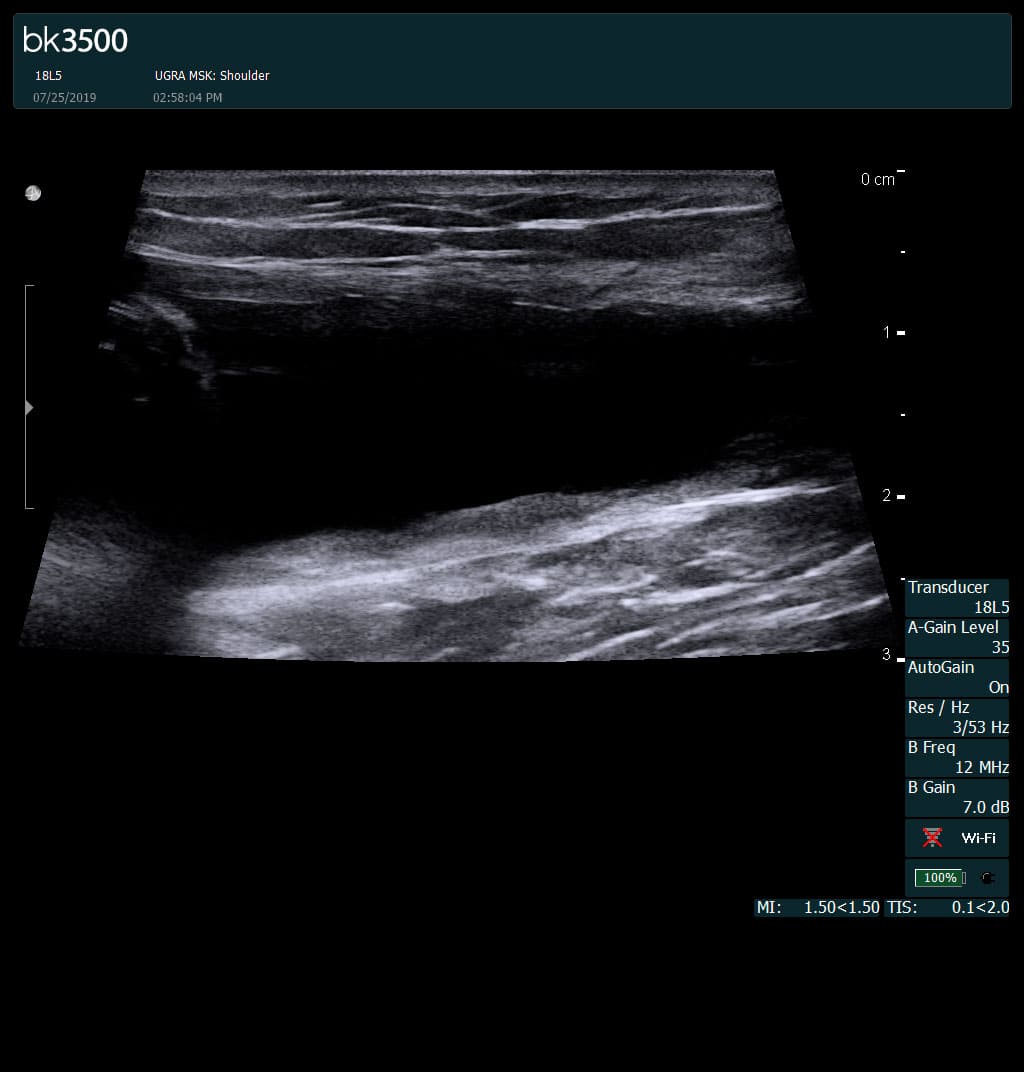
Separation of muscle ends due to tear elicited
on dynamic sonography examination


 Request Telehealth