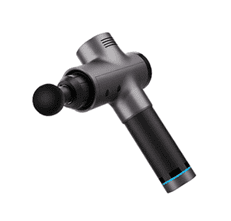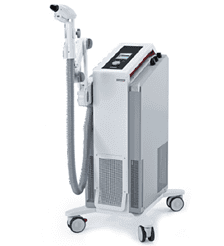
Our patient is a young, slender adult female reporting 7 months of severe posterior buttock pain. The pain radiated to her mid-posterior thigh and sometimes toward the rectal/perineal area. There was no numbness or tingling reported, and no clear patterns were found linking her pain to a specific nerve
The patient had already seen multiple orthopedic surgeons, pain specialists, and physiotherapists at major New York health care centers, and had undergone multiple spinal MRIs, with no major findings. She had been treated with epidural steroid injections and oral steroids, which failed to relieve her pain.
Upon reviewing the patient’s health history, we found that she had never received a dynamic exam of her hip and pelvic region – the clinicians who treated her relied solely on static images that were not clinically relevant to her reported pain.
Our clinical exam revealed marked hip hypermobility, to the point of borderline Ehlers-Danlos syndrome. Her internal hip rotation at 90° flexion reached approximately 75°, consistent with capsuloligamentous insufficiency – a condition where the supporting joint capsule and ligaments become weakened, stretched, or damaged, leading to instability.
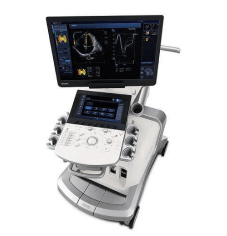
We used high resolution ultrasound to dynamically examine the patient’s hip and pelvis.
Our findings revealed:
We concluded that the patient’s hip instability was responsible for her pain symptoms, which explained why there was posterior thigh pain and occasional rectal pain with no paresthesia, and why epidural injections and oral steroids did not relieve her pain.
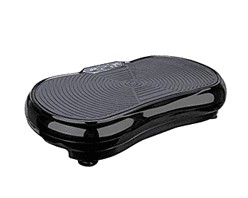
We took the following steps to alleviate the patient’s posterior hip pain:
Symptoms diminished by 30% after the initial prolotherapy injections, and by 80% after the second round. After completing targeted physical therapy, the patient was able to return to the gym, within four months of her first visit.
In hypermobility-related hip instability, posterior pain does not indicate posterior capsule tightening – it reflects the failure of posterior structures to adequately compensate for excessive motion of the femoral head. In such cases, static MRI imaging is insufficient to identify the mechanisms behind the symptoms. Only when viewed with dynamic ultrasound were we able to identify the functional mechanisms of pain.
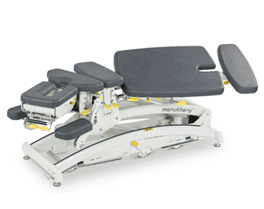
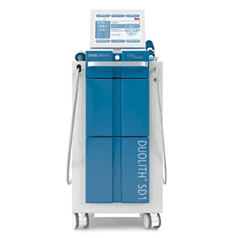
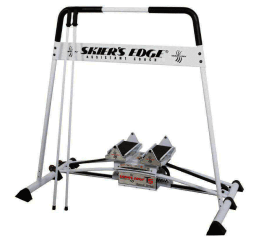
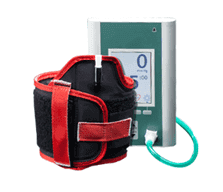
Our multifaceted treatment approach included orthobiologics, energy technologies, and customized physical therapy that helped to restore hip and pelvic stability and eliminate the compensation patterns that were the source of pain. Our integrative approach, backed by advanced imaging and therapeutic technologies, led to successful outcomes that could not be achieved with conventional methodologies.

Verified Expert Profiles


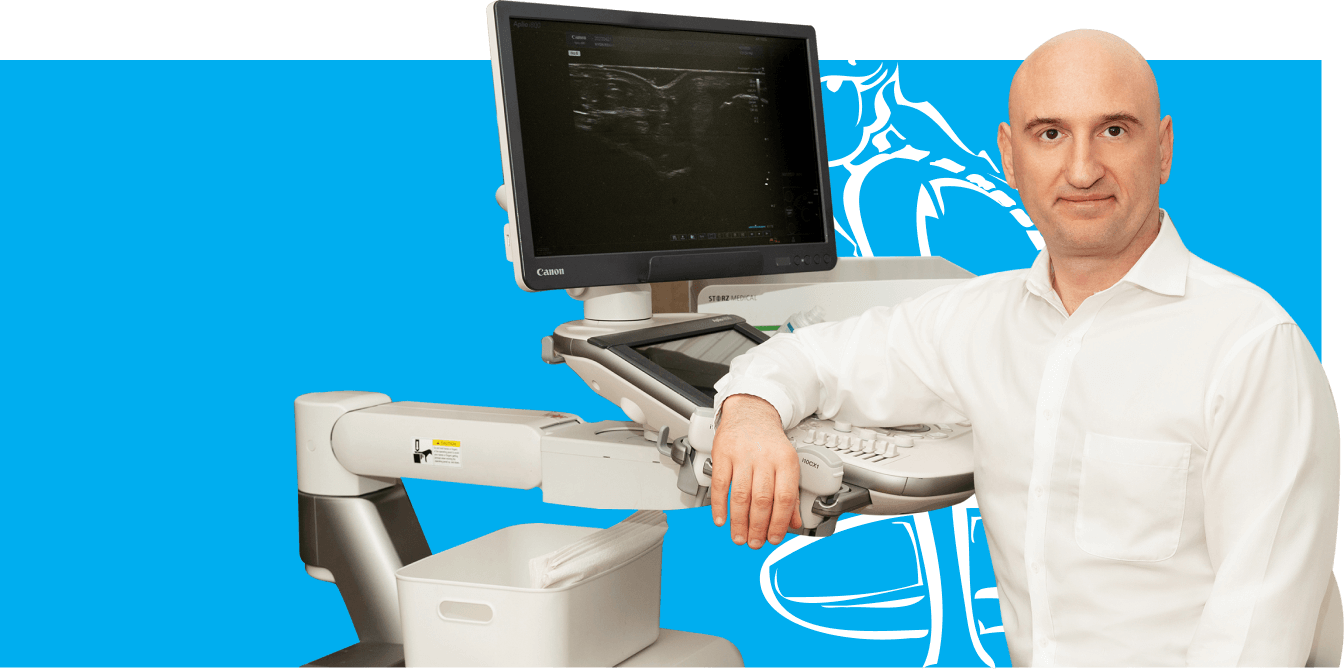
Dr. Lev Kalika is a world-recognized expert in musculoskeletal medicine. with 20+ years of clinical experience in diagnostic musculoskeletal ultrasonography, rehabilitative sports medicine and conservative orthopedics. In addition to operating his clinical practice in Manhattan, he regularly publishes peer-reviewed research on ultrasound-guided therapies and procedures. He serves as a peer reviewer for Springer Nature.
Dr. Kalika is an esteemed member of multiple professional organizations, including:

Below is a prime example of how ultrasound can take the guesswork out of diagnosis.

A bad physical therapy experience is one of the primary causes of unnecessary surgery

In this instance, an athlete was originally diagnosed with minor quadriceps muscle strain and was treated for four weeks, with unsatisfactory results. When he came to our clinic, the muscle was not healing, and the patients’ muscle tissue had already begun to atrophy.
Upon examination using MSUS, we discovered that he had a full muscle thickness tear that had been overlooked by his previous provider. To mitigate damage and promote healing, surgery should have been performed immediately after the injury occurred. Because of misdiagnosis and inappropriate treatment, the patient now has permanent damage that cannot be corrected.
The most important advantage of Ultrasound over MRI imaging is its ability to zero in on the symptomatic region and obtain imaging, with active participation and feedback from the patient. Using dynamic MSUS, we can see what happens when patients contract their muscles, something that cannot be done with MRI. From a diagnostic perspective, this interaction is invaluable.
Dynamic ultrasonography examination demonstrating
the full thickness tear and already occurring muscle atrophy
due to misdiagnosis and not referring the patient
to proper diagnostic workup
Demonstration of how very small muscle defect is made and revealed
to be a complete tear with muscle contraction
under diagnostic sonography (not possible with MRI)
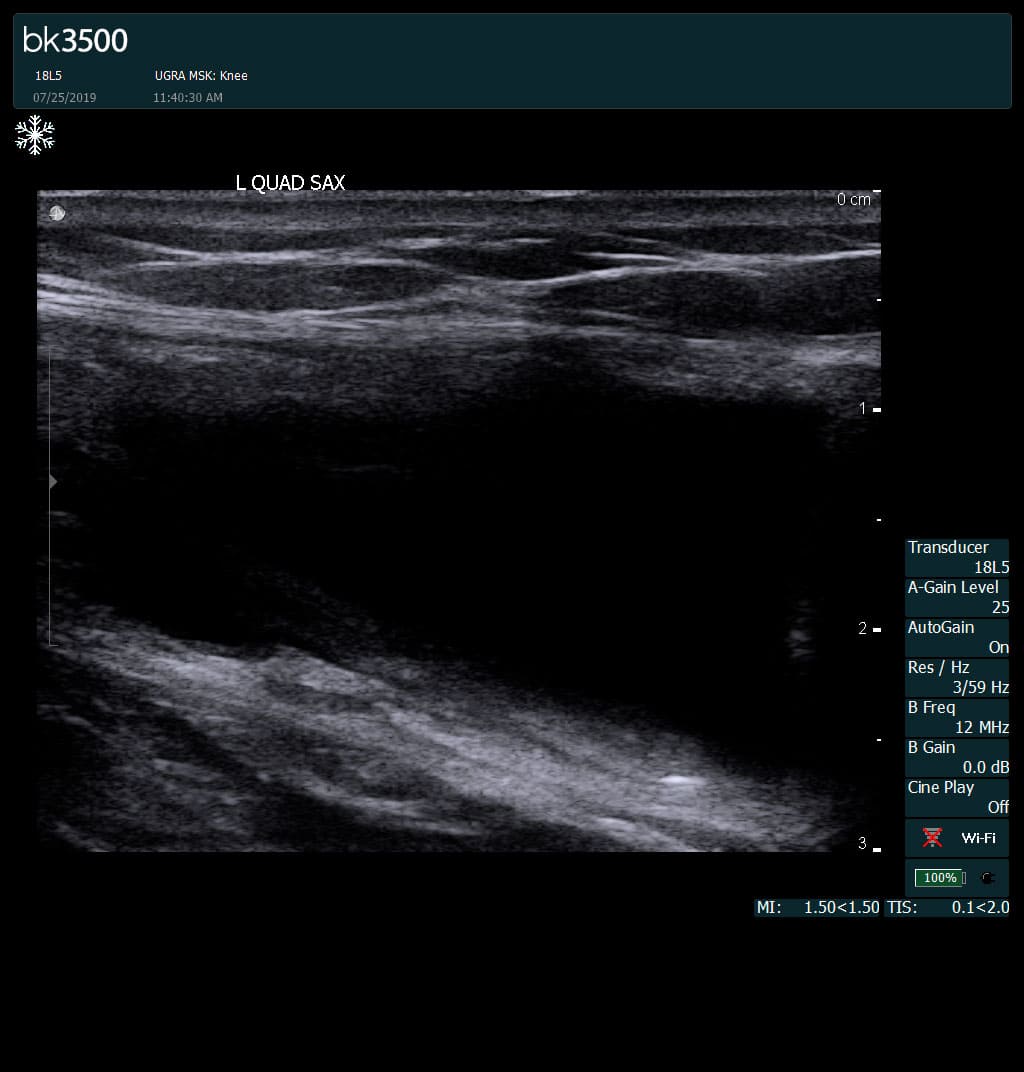
Complete tear of rectus femoris
with large hematoma (blood)
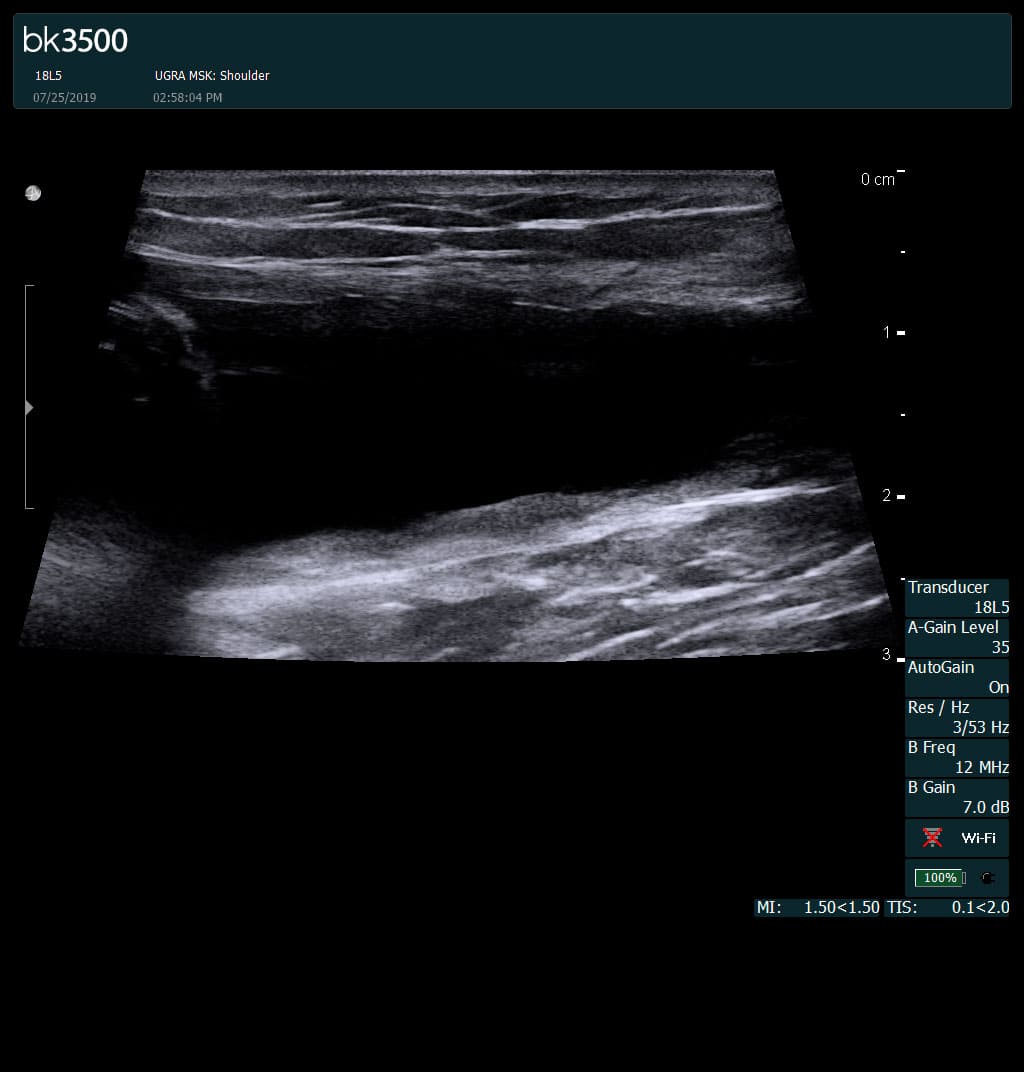
Separation of muscle ends due to tear elicited
on dynamic sonography examination


 Request Telehealth