Our patient is a young adult female athlete complaining of post-surgery knee instability after a knee injury.
The patient’s knee had been operated on at a top Qatari sports medicine hospital by a highly respected knee surgeon. The hospital is a key destination for injured athletes around the world, and she underwent rehabilitation with some of the world’s top physiotherapists. Her surgery was declared 100% successful, and post-surgical MRI showed normal MCL and LCL ligaments. However, the patient reported that the knee did not feel stable, and she came to us for help.
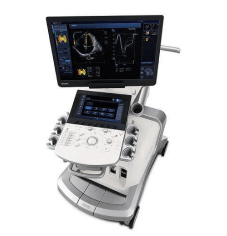
After a standard clinical exam, we conducted dynamic imaging of the knee using high-resolution ultrasound, along with stress testing for knee stability. Both the MCL and the LCL appeared to be intact, but dynamic imaging revealed a loss of tension in the ligaments. We concluded that the patient had mildly hypermobile joints that needed specialized treatment.
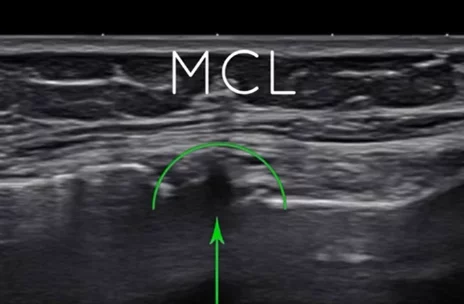
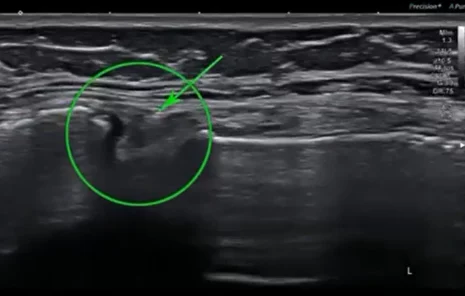
We treated the patient’s ligaments with a series of Prolotherapy injections, along with 3 months of hypermobility-specific physical rehabilitation. She reported significant improvement in knee stability, and results from a 3D gait analysis showed improvement in multiple kinematic and spatiotemporal markers. She returned to the clinic in Doha to complete her rehabilitation, with our recommendation that the rehab be conducted by a specialist experienced in working with hypermobile patients.
When treating patients with joint hypermobility, the joint capsule often appears normal on static imaging like MRI. However, with dynamic imaging we can observe the joint in motion, shedding light on factors that affect joint stability. In this case, the knee’s supporting structures generated insufficient tension to adequately stabilize the knee. Such cases require a clinician with expertise in dynamic imaging and experience working with hypermobile patients.
Dr. Lev Kalika is a world-recognized expert in musculoskeletal medicine. with 20+ years of clinical experience in diagnostic musculoskeletal ultrasonography, rehabilitative sports medicine and conservative orthopedics. In addition to operating his clinical practice in Manhattan, he regularly publishes peer-reviewed research on ultrasound-guided therapies and procedures. He serves as a peer reviewer for Springer Nature.
Dr. Kalika is an esteemed member of multiple professional organizations, including:

Below is a prime example of how ultrasound can take the guesswork out of diagnosis.

A bad physical therapy experience is one of the primary causes of unnecessary surgery

In this instance, an athlete was originally diagnosed with minor quadriceps muscle strain and was treated for four weeks, with unsatisfactory results. When he came to our clinic, the muscle was not healing, and the patients’ muscle tissue had already begun to atrophy.
Upon examination using MSUS, we discovered that he had a full muscle thickness tear that had been overlooked by his previous provider. To mitigate damage and promote healing, surgery should have been performed immediately after the injury occurred. Because of misdiagnosis and inappropriate treatment, the patient now has permanent damage that cannot be corrected.
The most important advantage of Ultrasound over MRI imaging is its ability to zero in on the symptomatic region and obtain imaging, with active participation and feedback from the patient. Using dynamic MSUS, we can see what happens when patients contract their muscles, something that cannot be done with MRI. From a diagnostic perspective, this interaction is invaluable.
Dynamic ultrasonography examination demonstrating
the full thickness tear and already occurring muscle atrophy
due to misdiagnosis and not referring the patient
to proper diagnostic workup
Demonstration of how very small muscle defect is made and revealed
to be a complete tear with muscle contraction
under diagnostic sonography (not possible with MRI)
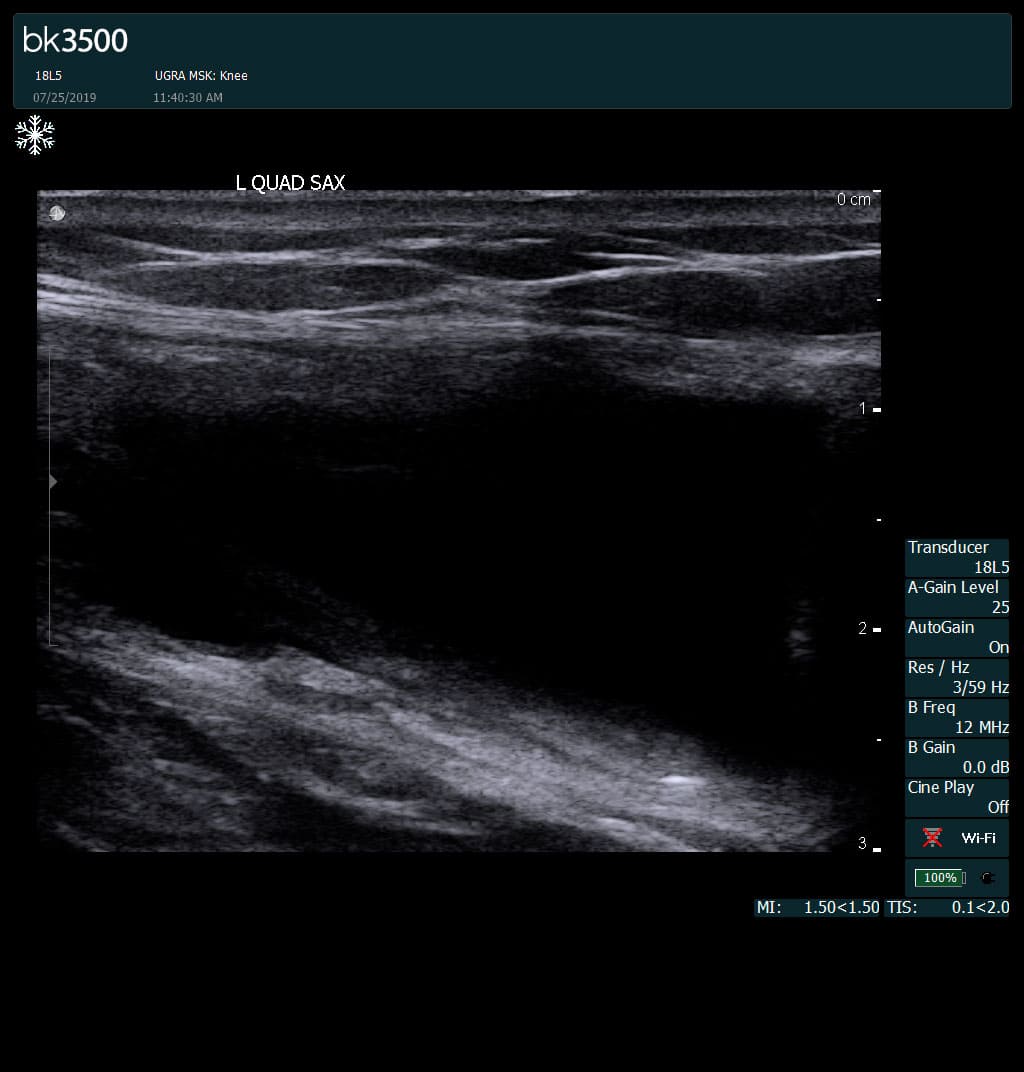
Complete tear of rectus femoris
with large hematoma (blood)
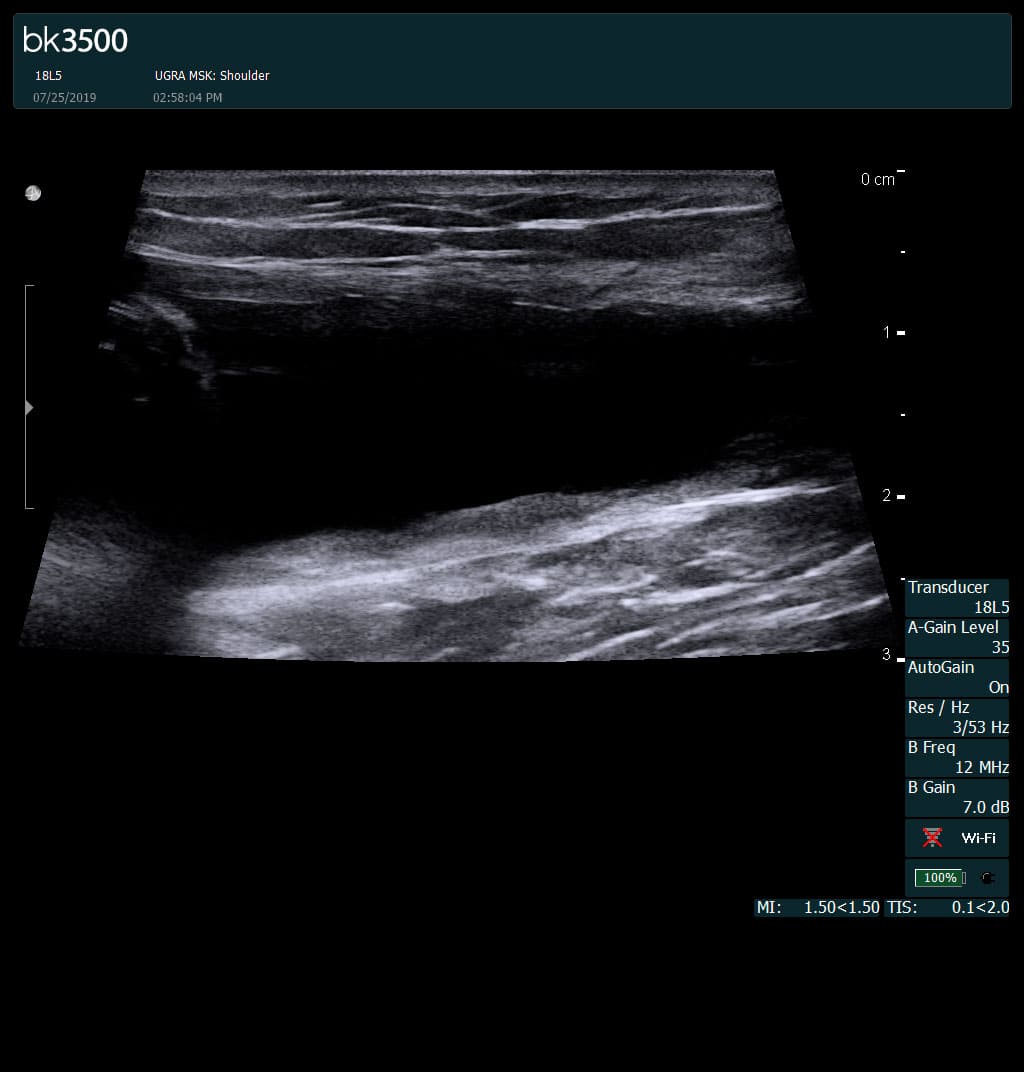
Separation of muscle ends due to tear elicited
on dynamic sonography examination


 Request Telehealth