Our patient is a 55 year-old military mechanic suffering from persistent pelvic pain lasting upwards of a year. The patient’s job entailed standing for long hours on concrete flooring.
The patient had undergone multiple diagnostic tests, including MRI of the spine, followed by multiple ineffective attempts at treatment.
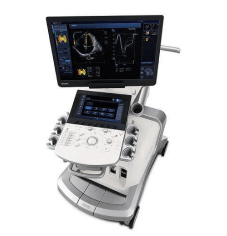
We used high-resolution diagnostic ultrasound to visualize the transabdominal region to assess for bladder neck rotation, and found multiple myofascial trigger points. A total body scan revealed multiple trigger points in the thoracic and lumbar multifidus, the shoulders, and the right sacroiliac joint (SIJ).
The patient received ultrasound-guided dry needling (DN) of identified trigger points, including the thoracolumbar fascia (5-6 mm thickness on US), the shoulders, the right sacroiliac joint, and the spastic medial quadratus lumborum. We used Stecco fascial manipulation to enhance shoulder mobility and range of motion. Pain intensity was assessed using a visual analogue scale (VAS).
Shoulder mobility was restored to 180 degrees, and dry needling of the thoracolumbar fascia and medial quadratus lumborum resulted in significant pain relief and movement restoration. Bladder hypermobility was reduced from 80 mm to 45 mm post-manipulation, and lower urinary tract symptoms were significantly reduced.
Pain in one area of the body is often linked to more distal issues. In this case, the patient’s pelvic pain was associated with postural issues and multiple trigger points further along the kinetic chain. Ultrasound-guided dry needling successfully eliminated painful trigger points along the spine and shoulders, and in the SIJ. We coupled dry needling with fascial manipulation and postural correction, resulting in pelvic pain elimination, enhanced mobility, and improved bladder neck motility.

Verified Expert Profiles


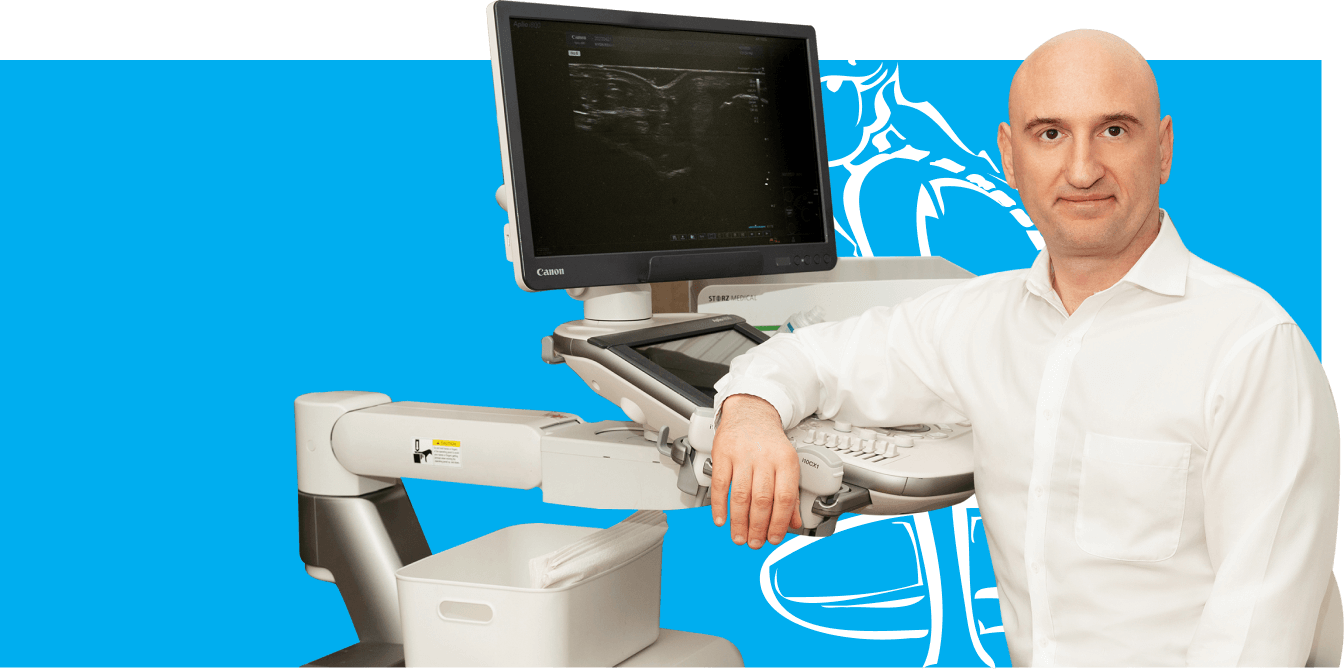
Dr. Lev Kalika is a world-recognized expert in musculoskeletal medicine. with 20+ years of clinical experience in diagnostic musculoskeletal ultrasonography, rehabilitative sports medicine and conservative orthopedics. In addition to operating his clinical practice in Manhattan, he regularly publishes peer-reviewed research on ultrasound-guided therapies and procedures. He serves as a peer reviewer for Springer Nature.
Dr. Kalika is an esteemed member of multiple professional organizations, including:

Below is a prime example of how ultrasound can take the guesswork out of diagnosis.

A bad physical therapy experience is one of the primary causes of unnecessary surgery

In this instance, an athlete was originally diagnosed with minor quadriceps muscle strain and was treated for four weeks, with unsatisfactory results. When he came to our clinic, the muscle was not healing, and the patients’ muscle tissue had already begun to atrophy.
Upon examination using MSUS, we discovered that he had a full muscle thickness tear that had been overlooked by his previous provider. To mitigate damage and promote healing, surgery should have been performed immediately after the injury occurred. Because of misdiagnosis and inappropriate treatment, the patient now has permanent damage that cannot be corrected.
The most important advantage of Ultrasound over MRI imaging is its ability to zero in on the symptomatic region and obtain imaging, with active participation and feedback from the patient. Using dynamic MSUS, we can see what happens when patients contract their muscles, something that cannot be done with MRI. From a diagnostic perspective, this interaction is invaluable.
Dynamic ultrasonography examination demonstrating
the full thickness tear and already occurring muscle atrophy
due to misdiagnosis and not referring the patient
to proper diagnostic workup
Demonstration of how very small muscle defect is made and revealed
to be a complete tear with muscle contraction
under diagnostic sonography (not possible with MRI)
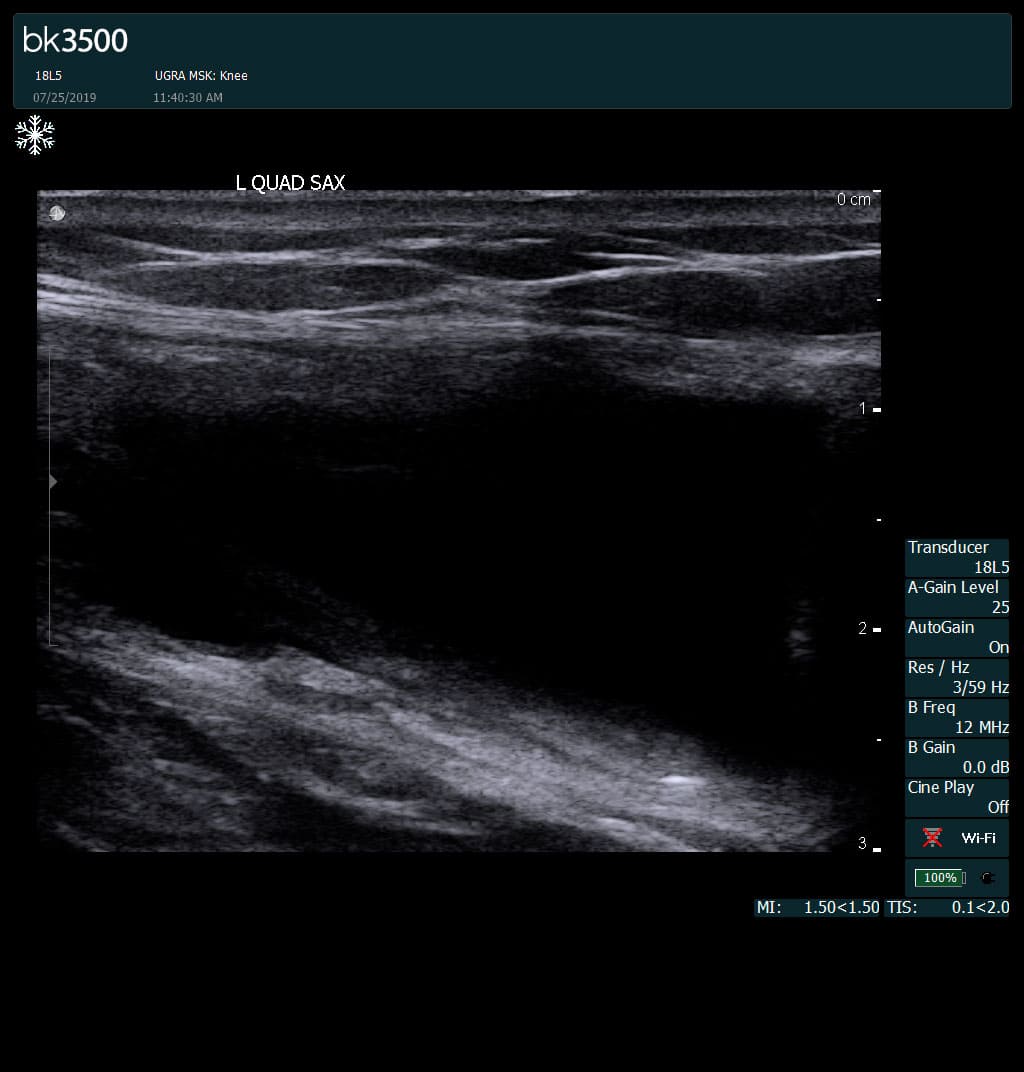
Complete tear of rectus femoris
with large hematoma (blood)
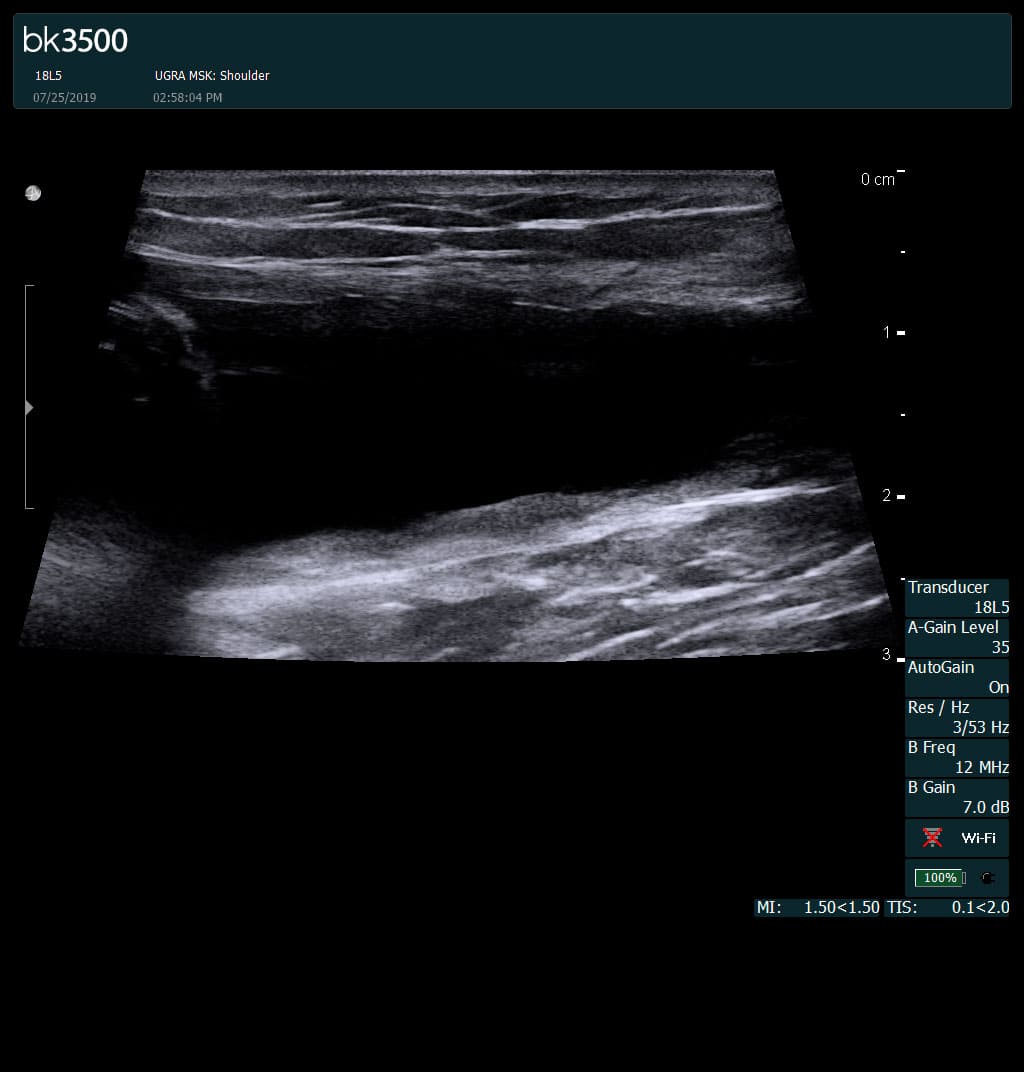
Separation of muscle ends due to tear elicited
on dynamic sonography examination


 Request Telehealth