Our patient is a middle-aged adult male complaining of mild shoulder pain and stiffness. His pain symptoms had been gradually improving, but as pain went away, stiffness increased.
The patient’s shoulder had previously been examined with both MRI and ultrasonography, but results made no mention of adhesive capsulitis.
Clinical Exam
Our review of the patient’s medical history noted that there had been no trauma to the shoulder, ruling out traumatic injury as a cause of symptoms. The patient reported symptoms of diminishing pain, but with increasing stiffness. The physical exam revealed minor restrictions in shoulder range of motion, but the capsular pattern of the glenohumeral joint was clear.
Ultrasound Imaging
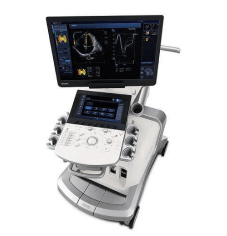
We used high-resolution ultrasound imaging to visualize the shoulder joint in motion.
Our findings revealed:
We compared the affected shoulder with the opposite shoulder, but the patient had experienced adhesive capsulitis in that shoulder two years prior, making it a poor point of reference.
None of our findings were dramatic or conclusive, but we suspected that the shoulder was in the early thawing phase of mild adhesive capsulitis, with mild capsular restriction.
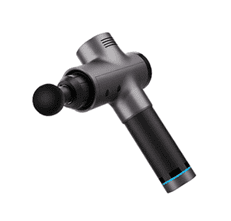
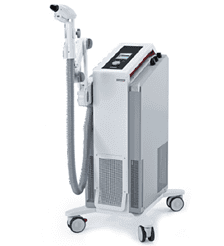
Since the patient was already improving, we proposed a conservative approach to treatment, with a combination of extracorporeal shockwave therapy (ESWT) and TECAR therapy. However, the patient insisted on a more definitive option.
We decided on a hydrodilatation procedure, followed immediately with manual capsular mobilization. Prior to the procedure, we performed TECAR therapy, then injected the region with a suprascapular nerve block consisting of 10 CCs of triamcinolone and 30 CCs of saline solution.
Immediately after the procedure, while still on the table, the patient experienced an 80% improvement in joint range of motion, with 100% ROM restoration within 10 days.
While imaging modalities like MRI and ultrasound provide valuable insights into musculoskeletal disorders, they do not always give us the full picture.
Imaging cannot replace:
Adhesive capsulitis symptoms are not always dramatic, and mild cases can be missed when imaging results come back negative. An astute clinical evaluation is a critical factor in getting to the bottom of mild symptoms.
Our key takeaway: When mild stiffness appears after shoulder pain improves, think adhesive capsulitis. Frozen shoulder syndrome does not always look “frozen”.
Dr. Lev Kalika is a world-recognized expert in musculoskeletal medicine. with 20+ years of clinical experience in diagnostic musculoskeletal ultrasonography, rehabilitative sports medicine and conservative orthopedics. In addition to operating his clinical practice in Manhattan, he regularly publishes peer-reviewed research on ultrasound-guided therapies and procedures. He serves as a peer reviewer for Springer Nature.
Dr. Kalika is an esteemed member of multiple professional organizations, including:

Below is a prime example of how ultrasound can take the guesswork out of diagnosis.

A bad physical therapy experience is one of the primary causes of unnecessary surgery

In this instance, an athlete was originally diagnosed with minor quadriceps muscle strain and was treated for four weeks, with unsatisfactory results. When he came to our clinic, the muscle was not healing, and the patients’ muscle tissue had already begun to atrophy.
Upon examination using MSUS, we discovered that he had a full muscle thickness tear that had been overlooked by his previous provider. To mitigate damage and promote healing, surgery should have been performed immediately after the injury occurred. Because of misdiagnosis and inappropriate treatment, the patient now has permanent damage that cannot be corrected.
The most important advantage of Ultrasound over MRI imaging is its ability to zero in on the symptomatic region and obtain imaging, with active participation and feedback from the patient. Using dynamic MSUS, we can see what happens when patients contract their muscles, something that cannot be done with MRI. From a diagnostic perspective, this interaction is invaluable.
Dynamic ultrasonography examination demonstrating
the full thickness tear and already occurring muscle atrophy
due to misdiagnosis and not referring the patient
to proper diagnostic workup
Demonstration of how very small muscle defect is made and revealed
to be a complete tear with muscle contraction
under diagnostic sonography (not possible with MRI)
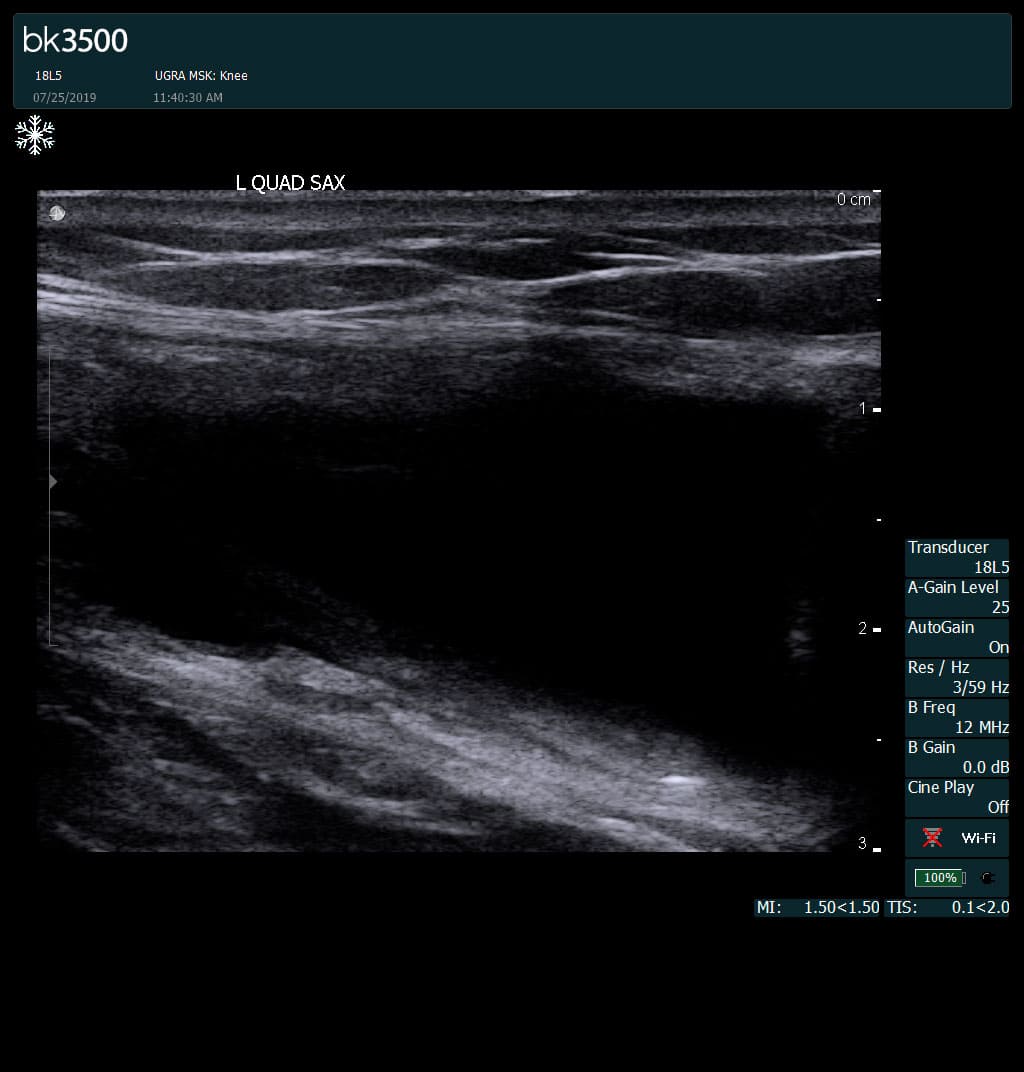
Complete tear of rectus femoris
with large hematoma (blood)
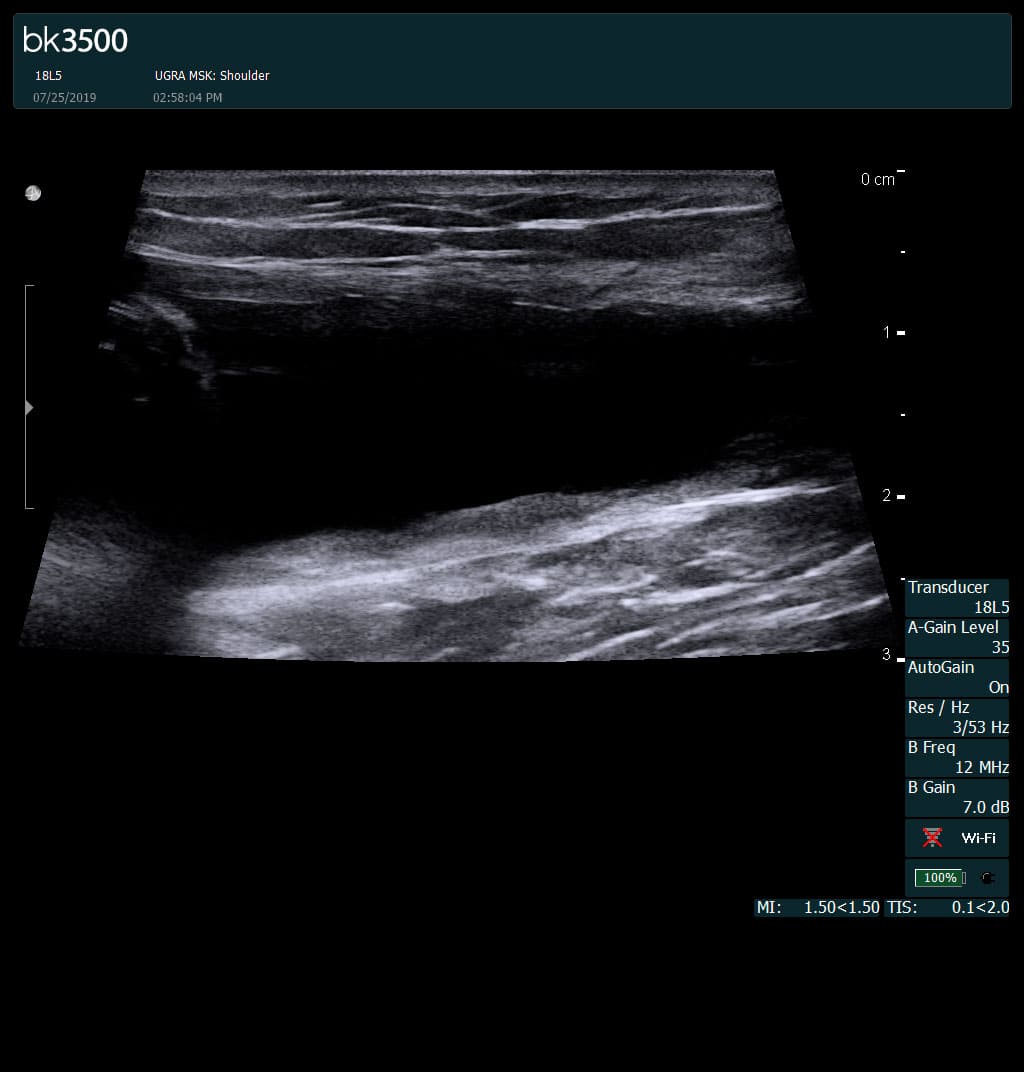
Separation of muscle ends due to tear elicited
on dynamic sonography examination


 Request Telehealth