When it comes to cases of nerve entrapment, many clinicians simply identify the entrapment site and perform a fascial hydrodissection, injecting saline into the fascial planes to restore nerve gliding. But while that approach can provide quick pain relief, it overlooks the underlying factors that led to nerve entrapment to begin with.
A classic example is a runner with pinpoint calf pain – the condition is often quickly labeled a “strain” or an “irritated nerve” without taking a closer look. But a more comprehensive clinical exam and ultrasound imaging frequently reveal a sural nerve entanglement, where the nerve is trapped between the crural fascia and the epimysial fascia of the gastrocnemius.
Ultrasound-guided hydrodissection, especially when higher volumes of saline are injected, can be a useful approach for pain relief, but it only treats the symptoms without questioning why the nerve became entrapped in the first place. Lasting results can only occur when the entire functional fascial plane is addressed.
Fascial densification, loss of gliding, and altered force transmission along the posterior chain — especially in runners with suboptimal mechanics — all set the stage for nerve entrapment. Simply releasing the point of entrapment without restoring fascial continuity and load-sharing is a recipe for long-term failure.
An in-depth knowledge of anatomy, skills in interpreting sonography images, and the ability to identify fascial planes via palpation, all directly translate into a superior injection strategy. Not only do we need to know where to inject, but also how far along the fascial plane we need to go to restore gliding and recalibrate force transmission.
Successful rehabilitation requires more than just asking which nerve is compressed – it demands a deeper investigation into why the fascia became dysfunctional, setting the stage for nerve entrapment.

Verified Expert Profiles


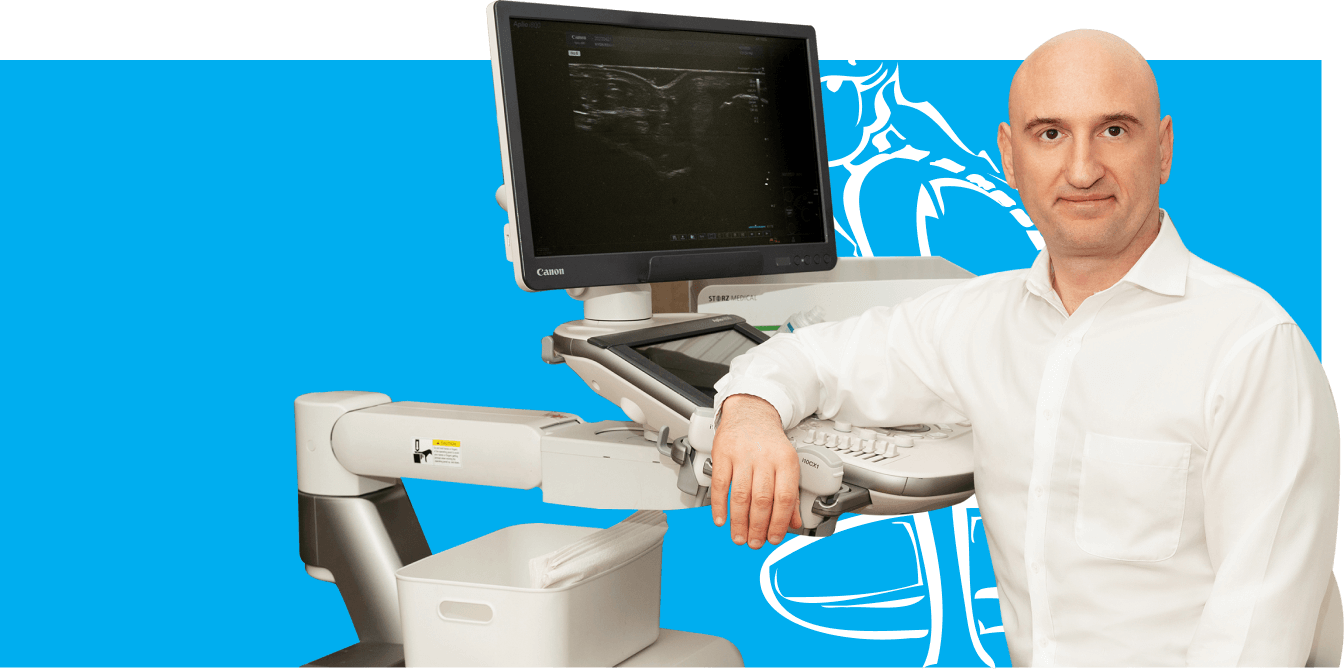
Dr. Lev Kalika is a world-recognized expert in musculoskeletal medicine. with 20+ years of clinical experience in diagnostic musculoskeletal ultrasonography, rehabilitative sports medicine and conservative orthopedics. In addition to operating his clinical practice in Manhattan, he regularly publishes peer-reviewed research on ultrasound-guided therapies and procedures. He serves as a peer reviewer for Springer Nature.
Dr. Kalika is an esteemed member of multiple professional organizations, including:

Below is a prime example of how ultrasound can take the guesswork out of diagnosis.

A bad physical therapy experience is one of the primary causes of unnecessary surgery

In this instance, an athlete was originally diagnosed with minor quadriceps muscle strain and was treated for four weeks, with unsatisfactory results. When he came to our clinic, the muscle was not healing, and the patients’ muscle tissue had already begun to atrophy.
Upon examination using MSUS, we discovered that he had a full muscle thickness tear that had been overlooked by his previous provider. To mitigate damage and promote healing, surgery should have been performed immediately after the injury occurred. Because of misdiagnosis and inappropriate treatment, the patient now has permanent damage that cannot be corrected.
The most important advantage of Ultrasound over MRI imaging is its ability to zero in on the symptomatic region and obtain imaging, with active participation and feedback from the patient. Using dynamic MSUS, we can see what happens when patients contract their muscles, something that cannot be done with MRI. From a diagnostic perspective, this interaction is invaluable.
Dynamic ultrasonography examination demonstrating
the full thickness tear and already occurring muscle atrophy
due to misdiagnosis and not referring the patient
to proper diagnostic workup
Demonstration of how very small muscle defect is made and revealed
to be a complete tear with muscle contraction
under diagnostic sonography (not possible with MRI)
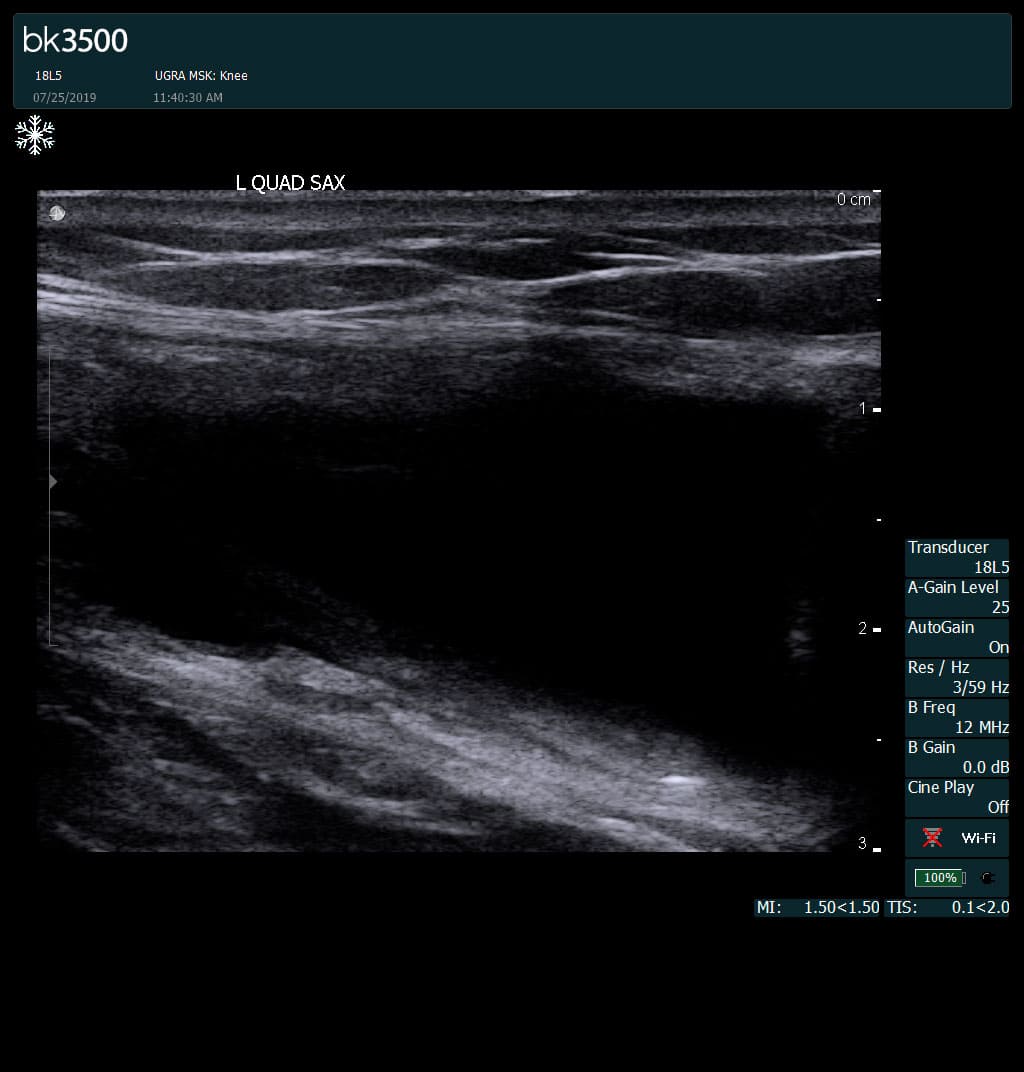
Complete tear of rectus femoris
with large hematoma (blood)
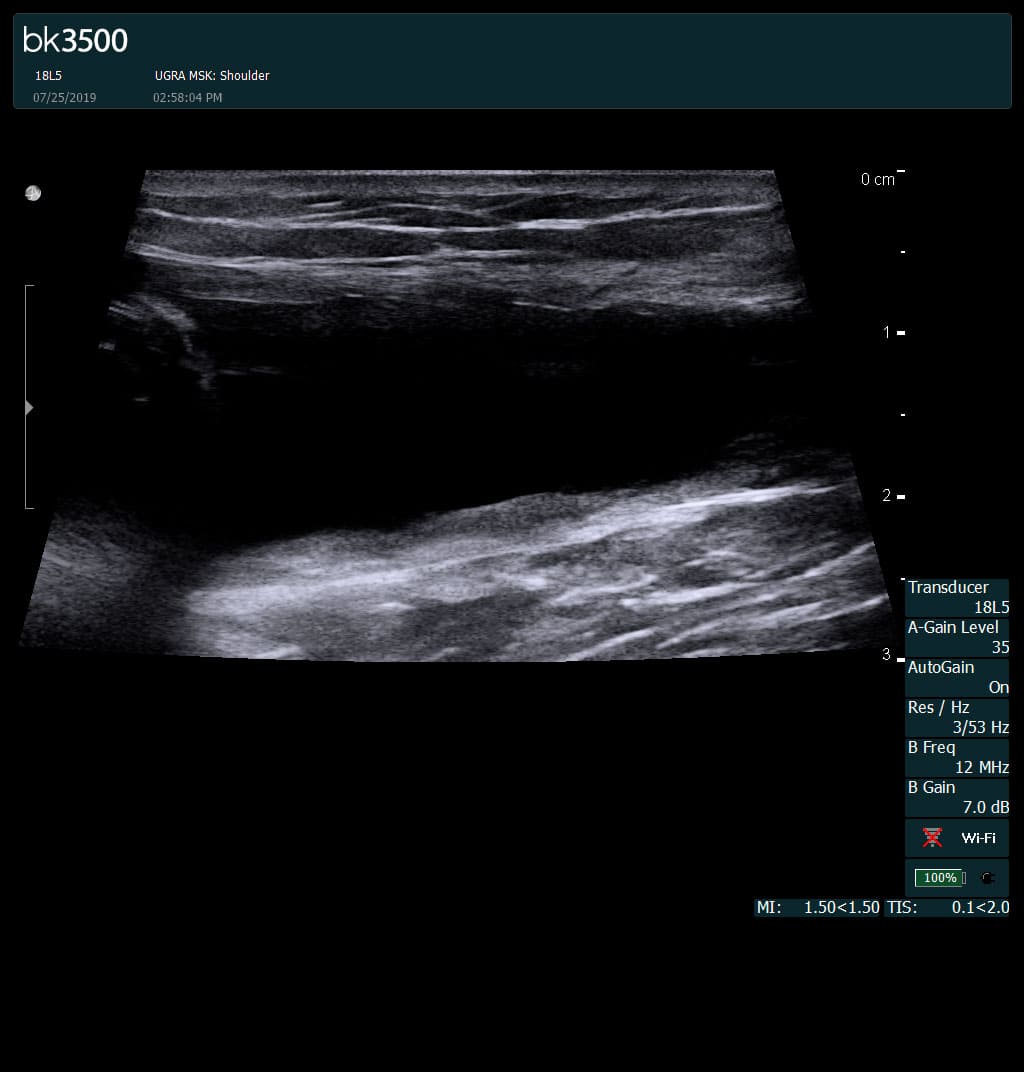
Separation of muscle ends due to tear elicited
on dynamic sonography examination


 Request Telehealth