New York Dynamic Neuromuscular Rehabilitation & Physical Therapy

You probably know what it feels like. The headache at the back of your head after spending a long day at the computer. Perhaps your shoulders round forward without you realizing, or you get up in the morning and find them stiff and it takes you an hour to get them going. “tech neck” is […]
Read More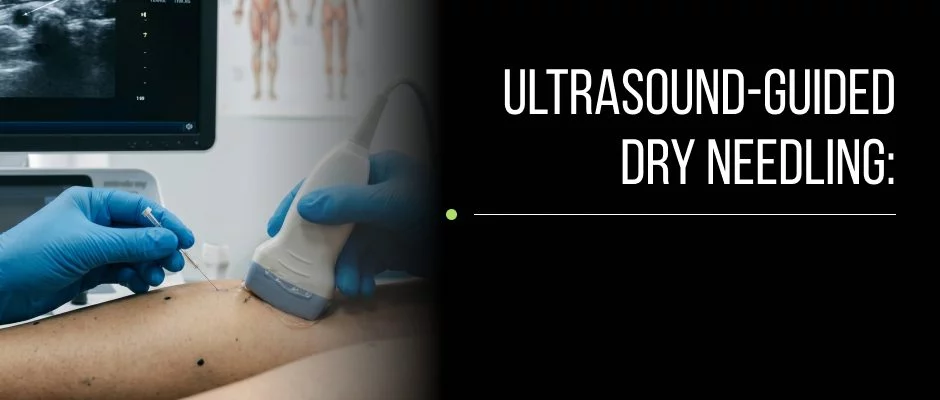
Trigger points are small but they can generate a lot of trouble. A taut band in the upper trapezius, no bigger than a grape, can produce headaches, shoulder restriction, and referred pain down the arm that mimics a rotator cuff tear. Identifying that band accurately, and reaching it safely with a needle, is harder than […]
Read More
Hip pain is a frequent problem, but the cause is often misdiagnosed. Patients often come in after having used rest, stretching, painkillers, massage, injections, or exercises they found online. These can be helpful for the right patient, but can also make recovery time longer if the actual cause is not identified. The take home message: […]
Read More
Chronic pain is a problem that plagues millions of people and for many, surgery is finally considered as a solution. That conversation is sometimes months after a failed treatment. It can occur quite early on. In either case, when most patients come to this point, they don’t have a good idea of what surgery can […]
Read More
There is more to good posture than how you look in the mirror. Your body is a biomechanical system of levers, much like a machine. In order for all your parts to move efficiently, without friction, they must be perfectly tuned and aligned. When one or more joints are misaligned, they impact the entire organism, […]
Read More Chronic lower back pain (LBP) is a persistent and debilitating condition that affects adult populations across the world. According to recent data from Statistica, around 620 million people world-wide suffer from chronic lower back pain, with projections that the condition will affect up to 7% of the world population by 2050. In the United States, […]
Read More
Proximal Hamstring Tendinopathy (PHT), sometimes called high hamstring tendinopathy, is a condition involving the upper hamstrings where they attach to the ischial tuberosity – aka sitbones – at the base of the pelvis. PHT is a common sports injury associated with repetitive overuse, but it can also affect sedentary non-athletes, often from excessive sitting or […]
Read More

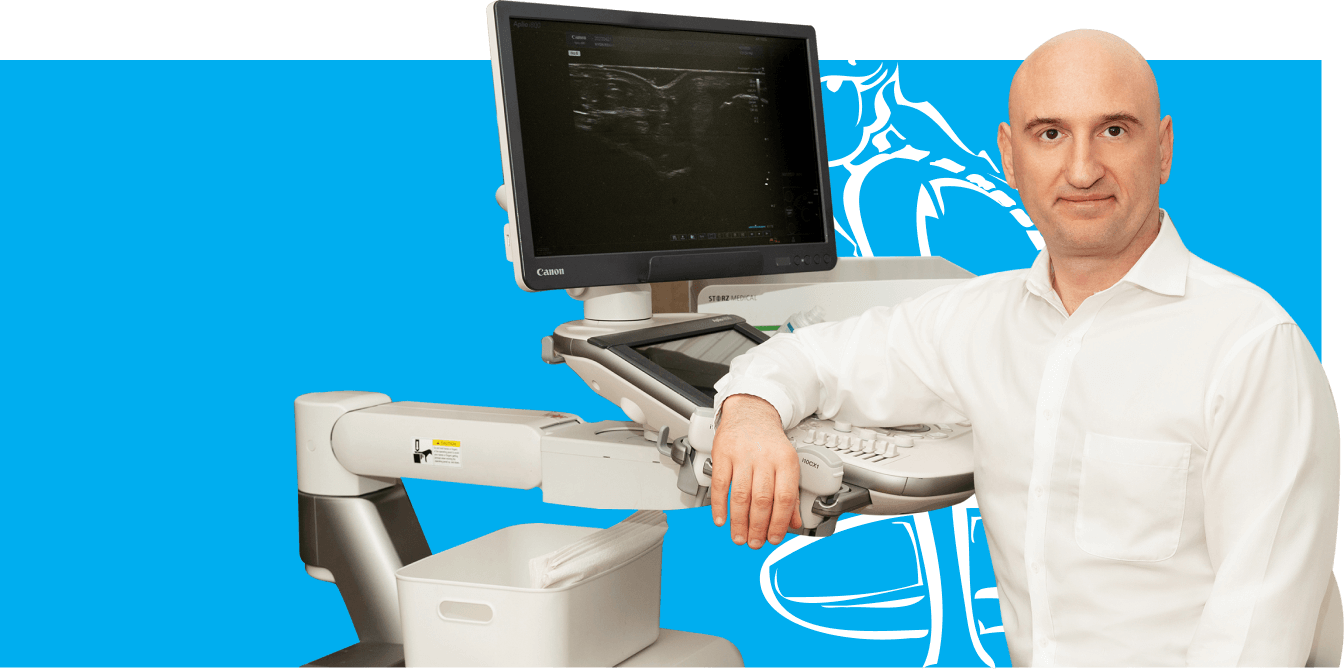
Below is a prime example of how ultrasound can take the guesswork out of diagnosis.

A bad physical therapy experience is one of the primary causes of unnecessary surgery

In this instance, an athlete was originally diagnosed with minor quadriceps muscle strain and was treated for four weeks, with unsatisfactory results. When he came to our clinic, the muscle was not healing, and the patients’ muscle tissue had already begun to atrophy.
Upon examination using MSUS, we discovered that he had a full muscle thickness tear that had been overlooked by his previous provider. To mitigate damage and promote healing, surgery should have been performed immediately after the injury occurred. Because of misdiagnosis and inappropriate treatment, the patient now has permanent damage that cannot be corrected.
The most important advantage of Ultrasound over MRI imaging is its ability to zero in on the symptomatic region and obtain imaging, with active participation and feedback from the patient. Using dynamic MSUS, we can see what happens when patients contract their muscles, something that cannot be done with MRI. From a diagnostic perspective, this interaction is invaluable.
Dynamic ultrasonography examination demonstrating
the full thickness tear and already occurring muscle atrophy
due to misdiagnosis and not referring the patient
to proper diagnostic workup
Demonstration of how very small muscle defect is made and revealed
to be a complete tear with muscle contraction
under diagnostic sonography (not possible with MRI)
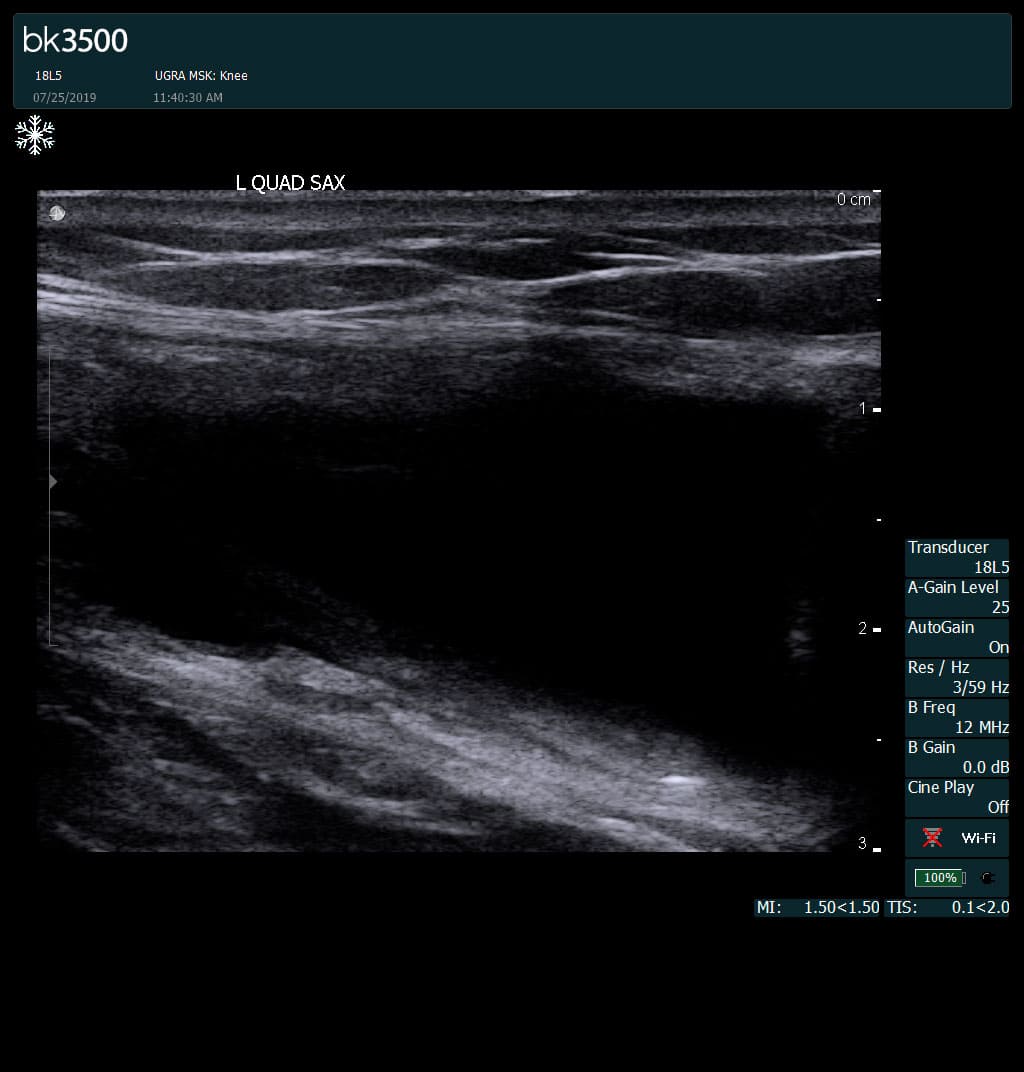
Complete tear of rectus femoris
with large hematoma (blood)
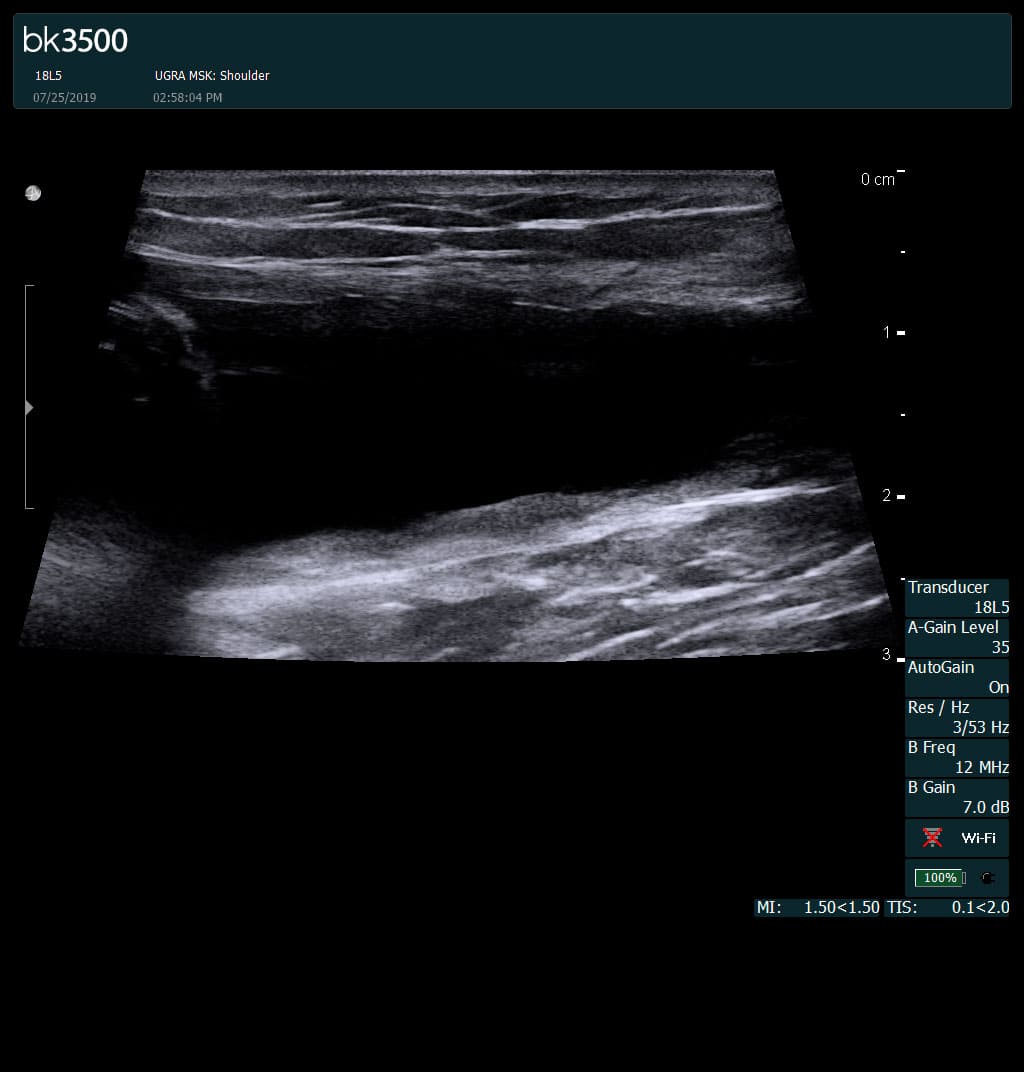
Separation of muscle ends due to tear elicited
on dynamic sonography examination


 Request Telehealth